

Architectural Blog:
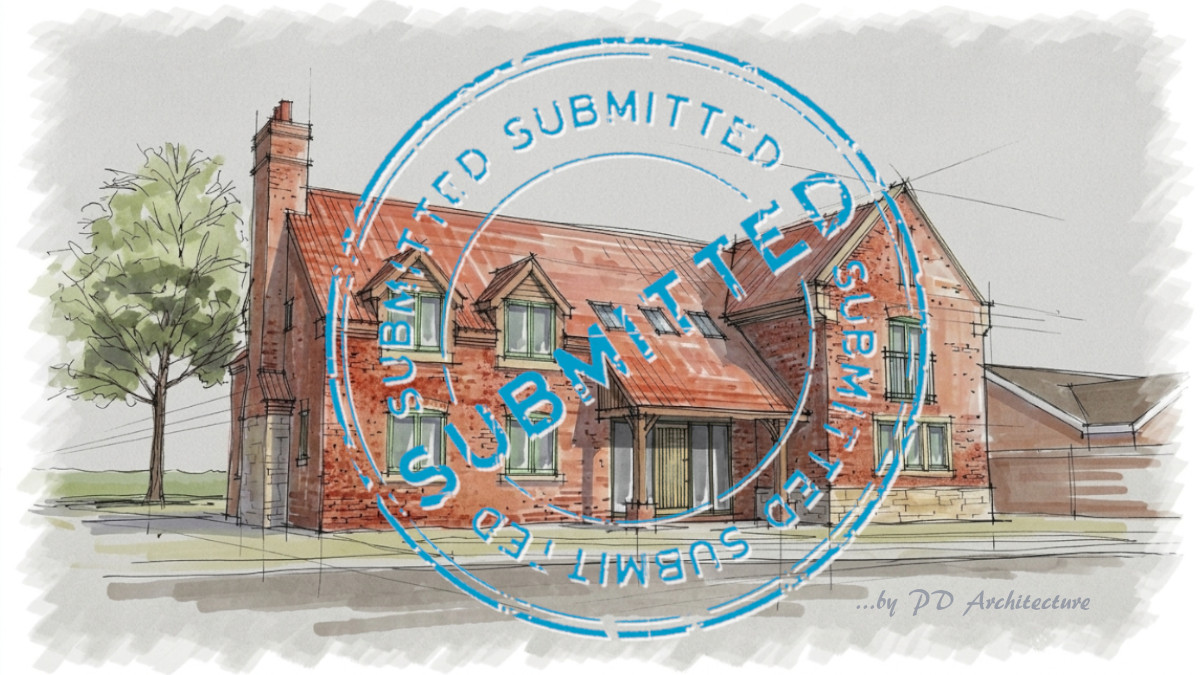
Our pre-application submission is now in for our replacement dwelling design in Nottingham.
The client is considering a replacement dwelling on what is a sensitive site—so we are taking the proactive step of a pre-app to help identify some of the planning risks at an early stage.
When the stakes are high, early planning engagement can be the smart move.
When Is a Pre-Application Submission Worth It?
At PD Architecture, we’re often asked whether a pre-application submission is worth the additional time and cost. The answer, as with most things in planning, is: it depends. However, for certain types of projects—particularly those involving sensitive sites—the value of early engagement with the local planning authority can be significant and can assist with reducing the planning risk.
This recent project, provides a clear example.
A Sensitive Site, A Big Decision
Our client approached us with ambitions to replace an existing dwelling located within a designated conservation area. While the principle of redevelopment wasn’t entirely off the table, the site presented several layers of complexity:
- Its location within a conservation area meant that preserving or enhancing local character would be a key consideration
- The existing property, while not listed, contributed to the wider streetscape and is on the edge of the village envelope.
- The plot has open views to the countryside either side of the existing dwelling, increasing scrutiny on design quality and maintaining vista’s.
- There were questions around scale, massing, and the appropriateness of the client’s replacement dwelling brief.
Rather than proceeding directly to a full planning application with all the inherent risks, we recommended a pre-application submission to ensure the client was fully appraised of the planning risks before progressing with a formal planning application.
What Is a Pre-Application Submission?
A pre-application (or “pre-app”) is an informal process where a proposal is submitted to the local planning authority for early feedback before a formal planning application is made.
While the response is not legally binding, it provides valuable insight into how planning officers are likely to view a scheme. It also often includes useful feedback from key statutory consultees like, Highways/Ecology/Conservation/Environment Agency etc…
Why It Made Sense Here
For this project, a pre-application offered several key advantages:
- Understanding the Council’s Position Early
In conservation areas, planning decisions are often finely balanced. By engaging early, we are able to gauge the authority’s initial stance on:
- Whether a replacement dwelling would be supported in principle
- How the existing building was valued in heritage terms
- The level of design quality expected
- How the scale and massing of the replacement dwelling in comparison to the existing dwelling would be viewed
Quantifying these key metrics at an early stage helps reduce uncertainty before significant design time is invested.
- Testing Design Ideas Without Full Commitment
We presented a carefully considered concept that explored:
- A modern interpretation of local architectural character
- A revised building footprint to improve spatial relationships
- A layout to maintain important countryside vista’s around the property
- Enhanced landscaping to soften visual impact
The pre-app allows us to “test” these ideas and receive constructive feedback, without the pressure of a formal determination. Limiting the client’s risks and expenditure in the early phase of the design process.
- Identifying Risks Early
The feedback may highlight specific concerns around scale and the building’s prominence within the street scene. While not always unexpected, having these points confirmed early allows us to:
- Refine the design strategy
- Explore alternative massing options
- Strengthen the justification for the proposal
Addressing these issues before a formal planning application is far more efficient than reacting to a refusal later.
- Saving Time and Cost in the Long Run
Although pre-app submissions involve an upfront fee and usually 21 days, [sometimes 8-12 weeks], before a response is provided, they can ultimately save time and money by:
- Reducing the likelihood of refusal
- Minimising the need for multiple redesigns
- Streamlining the formal application process
For our clients, this means moving forward with greater confidence and clarity.
When Is a Pre-App Most Advantageous?
Based on our experience, pre-application submissions are particularly valuable when:
- A site is within a conservation area or near listed buildings
- The proposal is large, complex, or potentially contentious
- Planning policy is open to interpretation
- There is a high financial or emotional investment in the outcome
Conversely, for minor or straightforward applications, a pre-app may not always be necessary.
Our Approach at PD Architecture
We see pre-application engagement as a strategic tool rather than a default step. For each project, we assess whether the benefits outweigh the time and cost involved.
In many cases, the pre-app allows us to move forward with a clearer, more informed design direction—one that responds sensitively to its context while still meeting the client’s aspirations.
Final Thoughts
Planning in sensitive contexts is rarely black and white. A well-prepared pre-application submission can provide invaluable guidance, reduce risk, and ultimately lead to a stronger outcome.
If you’re considering a project—particularly on a constrained or sensitive site—we’d be happy to advise on whether a pre-application is the right approach for you.
Tip: Use our free initial enquiry forms to request a meeting and discuss your project.
Further reading: Pre-application advice – The Planning Portal
PD Architecture . . . residential specialists – everything we do is #designed4living.
An award Winning CIAT Chartered Architectural Practice. We provide architectural services for homeowners, developers, self-builders & architects in Nottingham, Leicester & beyond . . . back to homepage

Architectural Blog: How to Budget for a Custom Home or Extension. A practical guide to understanding costs before you build
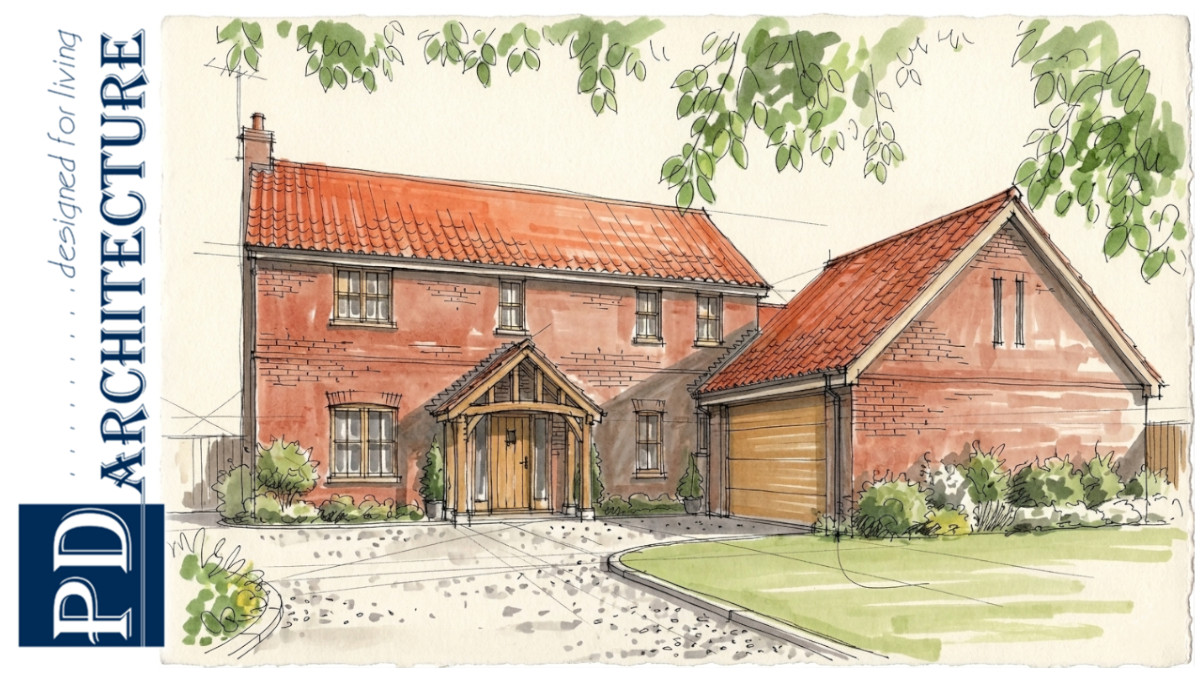
Completion is nearing on our self-build home design in Grimston, Melton Mowbray – as built photography coming soon.